
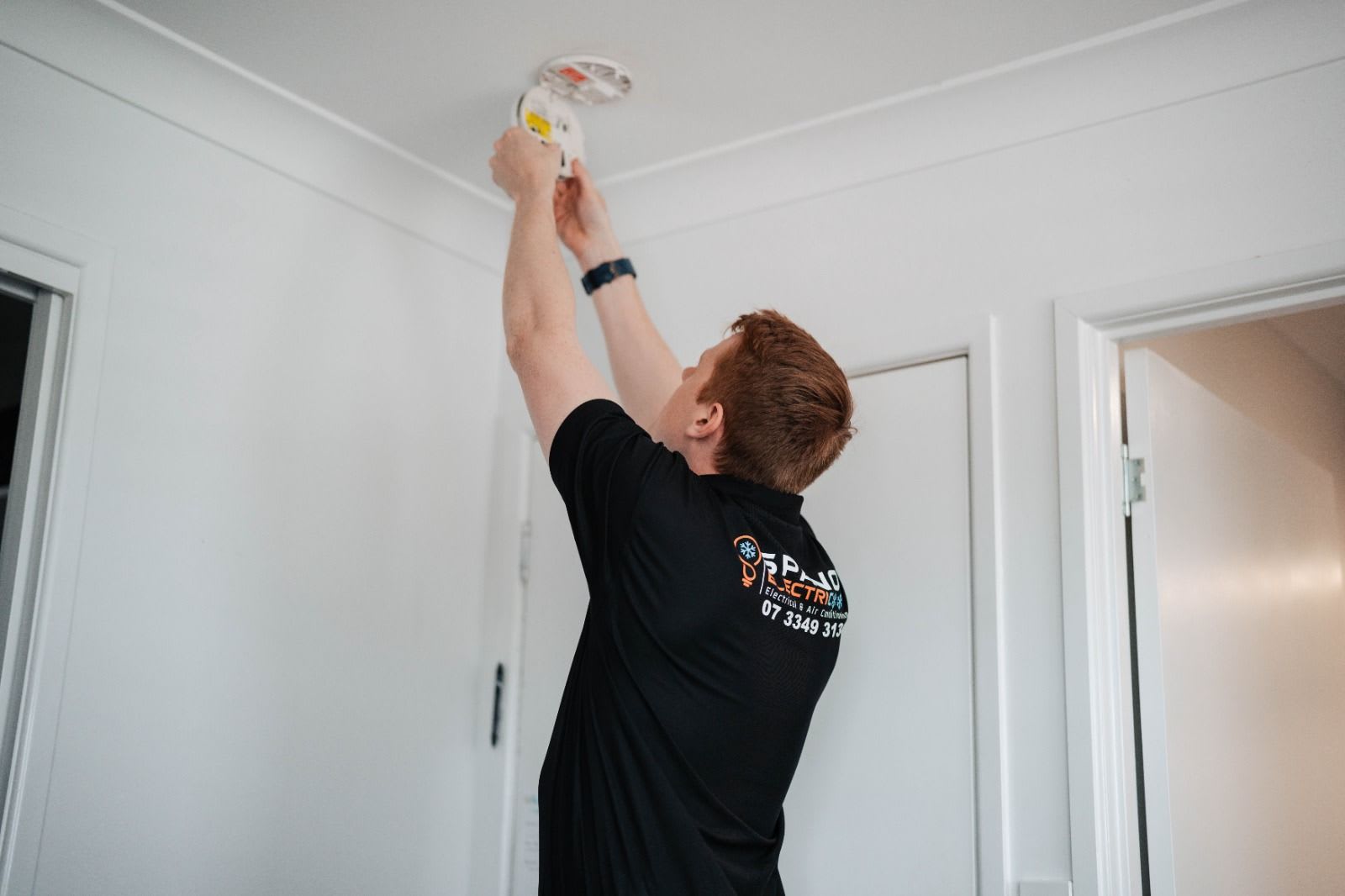
Queensland homeowners have an important smoke alarm deadline approaching. From 1 January 2027, all existing private homes, townhouses, units and manufactured homes must have compliant interconnected photoelectric smoke alarms. The final stage of Queensland's smoke alarm legislation has been introduced to improve early fire warning and give occupants more time to respond safely.
At Spanos ElectriCool, we understand that smoke alarm compliance is not simply about installing a device on the ceiling. The type, location, age, power source and interconnection of alarms all matter. Planning ahead can also give homeowners more time to identify outdated alarms and arrange suitable work before the 2027 deadline.
What Does the 2027 Smoke Alarm Deadline Mean?
The Queensland smoke alarm laws have been introduced in stages since 2017. The final stage applies to remaining existing domestic dwellings from 1 January 2027. This means homeowners should not assume that an older working smoke alarm automatically meets the current requirements.
Which homes need to comply?
From 1 January 2027, existing private homes, townhouses, units and manufactured homes across Queensland will need compliant interconnected photoelectric smoke alarms. Requirements already apply in certain circumstances, including homes that are sold or leased.
For homeowners, this makes it worthwhile to review the existing smoke alarm system now. If changes are needed, arranging professional smoke detector installers early can allow time for assessment, replacement and testing without waiting until the deadline.
Why should homeowners act before 2027?
Waiting until the final months may create practical challenges. Queensland's Office of Fair Trading has specifically advised homeowners not to leave compliance work until the last minute because increased demand may affect product supply and pricing.
Early planning can help you:
- Identify expired or faulty alarms
- Determine whether existing alarms are interconnected
- Check whether alarms are photoelectric
- Confirm the Australian Standard marking
- Allow time for required installation or replacement work
- Reduce the risk of rushing compliance work close to the deadline
What Makes a Smoke Alarm Compliant in Queensland?
Understanding the basic requirements makes it easier to review your current system. Queensland guidance states that required smoke alarms must be photoelectric, interconnected, comply with AS 3786-2014 and be less than 10 years from the date of manufacture. They must also operate when tested.
Photoelectric smoke alarms
Photoelectric alarms use light-based sensing technology to detect smoke. Under Queensland's requirements, compliant smoke alarms must be photoelectric and must not contain an ionisation sensor. The alarm should also carry the AS 3786-2014 marking.
When we assess smoke alarms, checking the existing alarm type and age is an important part of understanding whether replacement may be necessary. An alarm can look clean and functional while still being too old or unsuitable under the current requirements.
Interconnected smoke alarms
Interconnection is another important requirement. When compliant smoke alarms are interconnected, activation of one alarm causes the other required alarms in the dwelling to activate as well. This can provide an earlier warning to people elsewhere in the property.
Interconnection can be achieved through wiring or compatible wireless technology, depending on the installation. Existing homes can have different power arrangements, so the appropriate solution should be determined according to the property and applicable requirements.
 Where Do Smoke Alarms Need to Be Installed?
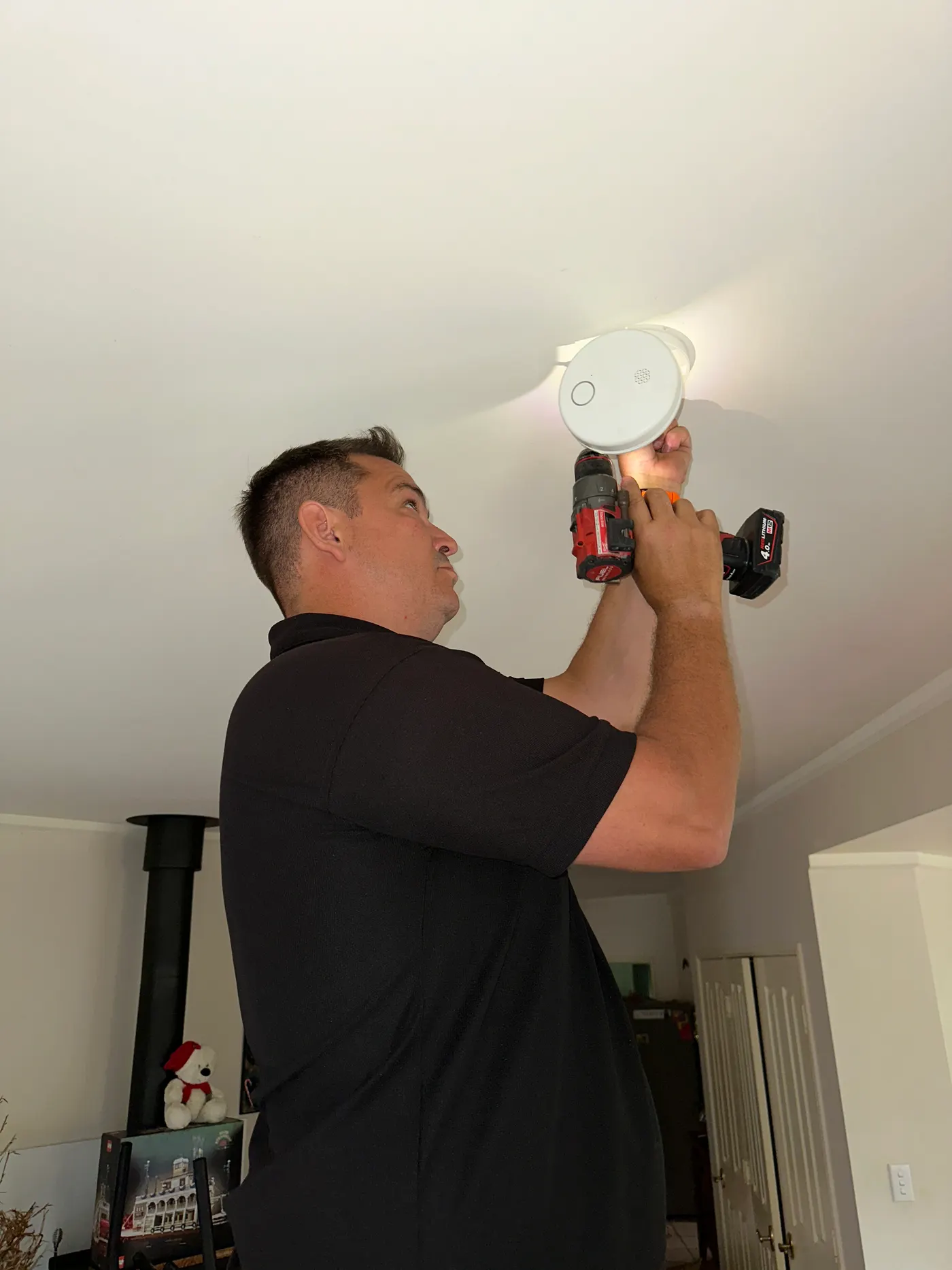
Smoke alarm placement is just as important as the type of alarm. Queensland requirements generally specify alarms in each bedroom, in connecting hallways and on each storey of a dwelling. Where a storey has no bedrooms, at least one alarm is required in the most likely path of travel to an exit.
Placement matters for effective warning
Where practicable, smoke alarms should be installed on the ceiling. Queensland Fire Department guidance also specifies separation distances from corners, lights, air-conditioning vents and ceiling fans. There are additional considerations for sloping ceilings, exposed beams and stairways.
For this reason, installing an alarm in the most convenient location is not always appropriate. Professional smoke detector installers can assess the property layout and determine suitable positions based on the applicable requirements.
Why Regular Smoke Alarm Testing and Servicing Matters
Compliance is not only about installation. Smoke alarms should be tested monthly and kept free from dust and other debris that could affect their operation. Queensland Fire Department advises homeowners to test their alarms regularly, with monthly testing recommended, and keep them maintained.
Check the age and condition of your alarms
Smoke alarms that are more than 10 years from the date of manufacture or fail to operate when tested need to be replaced. If an existing hardwired alarm needs replacement, the replacement must also be hardwired.
Our smoke alarm service in Brisbane includes installation, replacement, testing and servicing. Spanos ElectriCool can assess existing alarms and explain the work required based on the property's current setup.
What Could Happen If Your Smoke Alarms Are Not Compliant?
The consequences of non-compliance depend on the property and circumstances, so homeowners should not rely on assumptions about what applies to them. Queensland legislation creates specific obligations, and requirements already apply in situations such as selling or leasing a dwelling.
Selling or leasing a property
Smoke alarm requirements can become particularly important when a property is being sold or leased. Queensland Fire Department states that homes being sold must have the required photoelectric, interconnected smoke alarms, while rental properties have existing obligations under the staged legislation.
This is one reason early planning is useful. If an inspection identifies an outdated or incorrectly installed system shortly before a property transaction, there may be limited time to arrange the required work.
Avoid leaving compliance until the deadline
The 2027 deadline does not mean homeowners should wait until 2027 to start checking their alarms. Queensland Government guidance recommends avoiding last-minute action because demand for compliant alarms and installation services may increase as the deadline approaches.
Arranging smoke alarm upgrades in Brisbane ahead of time can also give homeowners an opportunity to address other issues discovered during an assessment.
When Should You Arrange Smoke Alarm Upgrades?
There are several reasons to arrange an assessment or replacement before the final deadline. These include expired alarms, failed tests, non-interconnected systems, unsuitable alarm types and changes to the property.
Older systems may need attention
If your home still has older alarms, check their date of manufacture and markings. Queensland Fire Department states that compliant alarms must be less than 10 years from the date of manufacture, operate when tested and meet AS 3786-2014.
Spanos ElectriCool provides smoke alarm installation and replacement services and uses a process that includes booking, site assessment where required, quoting and completion of the work. Our service information also states that we provide upfront pricing and testing as part of the smoke alarm service.
Hardwired and battery-powered systems
Queensland requirements allow compliant smoke alarms to be hardwired or powered by a non-removable 10-year battery in applicable existing dwellings. However, when an existing hardwired 240V alarm is replaced, the replacement must also be hardwired.
This distinction is important because the correct replacement is not necessarily determined by convenience. The existing installation and applicable requirements should be considered before work begins.
How Spanos ElectriCool Can Help With Smoke Alarm Compliance
Spanos ElectriCool provides residential electrical services in Brisbane, including smoke alarm installation, replacement, testing and servicing. Our smoke alarm service information states that we install compliant photoelectric alarms in required bedrooms, hallways and levels of homes.
A practical approach to compliance
Our process starts with understanding the property and the existing smoke alarm system. Where a site visit is required, we assess the installation and provide a fixed-price quote before approved work begins. After completion, the installation is tested as appropriate.
If your property needs smoke alarm upgrades in Brisbane, reviewing the system before the 2027 deadline can help identify what needs to change and give you time to arrange the work.
A Simple 2027 Smoke Alarm Checklist
Before the deadline, homeowners can review the following points:
- Check whether each required alarm is less than 10 years from the date of manufacture.
- Look for the AS 3786-2014 marking.
- Confirm that the alarms are photoelectric.
- Check whether the required alarms are interconnected.
- Test each alarm monthly, following the manufacturer's instructions.
- Check that alarms are positioned appropriately.
- Arrange professional assessment if you are unsure about compliance.
- Do not remove or disable alarms because of nuisance activations.
If a hardwired alarm needs replacement or an electrical connection requires modification, qualified electrical work should be performed by an appropriately licensed electrician.
Conclusion
Existing private homes, townhouses, units and manufactured homes need compliant interconnected photoelectric smoke alarms by this date. The requirements cover factors including alarm type, interconnection, the date of manufacture, placement and operation. Taking action early can make the process more manageable and may help avoid last-minute supply or scheduling difficulties. It also gives homeowners time to identify alarms that are expired, faulty or unsuitable for the current requirements.
If you are unsure about your property's smoke alarm setup, contact us to arrange an assessment or request a quote.
Frequently Asked Questions
What is the smoke alarm deadline in Queensland?
The final deadline for existing Queensland homes is 1 January 2027. By this date, existing private homes, townhouses, units and manufactured homes must have compliant interconnected photoelectric smoke alarms.
Do all smoke alarms need to be interconnected?
Required smoke alarms in a dwelling must be interconnected so that when one detects smoke, the other required alarms activate as well. Interconnection can be wired or wireless, depending on the installation.
How old can a compliant smoke alarm be?
Queensland requirements state that smoke alarms must be less than 10 years from the date of manufacture. Alarms that are more than 10 years from the date of manufacture or fail when tested should be replaced with compliant alarms.
Can I install a battery-powered smoke alarm myself?
Queensland Fire Department states that certain 10-year non-removable battery photoelectric smoke alarms can be installed by homeowners. Hardwired smoke alarms, however, must be installed by a licensed electrician. The appropriate installation depends on the existing system and applicable requirements.
Why should I arrange smoke alarm work before 2027?
Starting early gives you time to identify expired, faulty or non-compliant alarms and arrange any required work. Queensland's Office of Fair Trading also recommends avoiding the last minute because increased demand near the deadline may affect supply and pricing.
 (1).png)