Call Us Now:(07) 3349 3134
Monday - Thursday 7:30am - 4:00pm|Friday 7:30am – 2:00pm

Smoke Alarm Compliance
Smoke Alarm Compliance in Queensland: What Homeowners Need to Know Before 2027
September 14, 2026
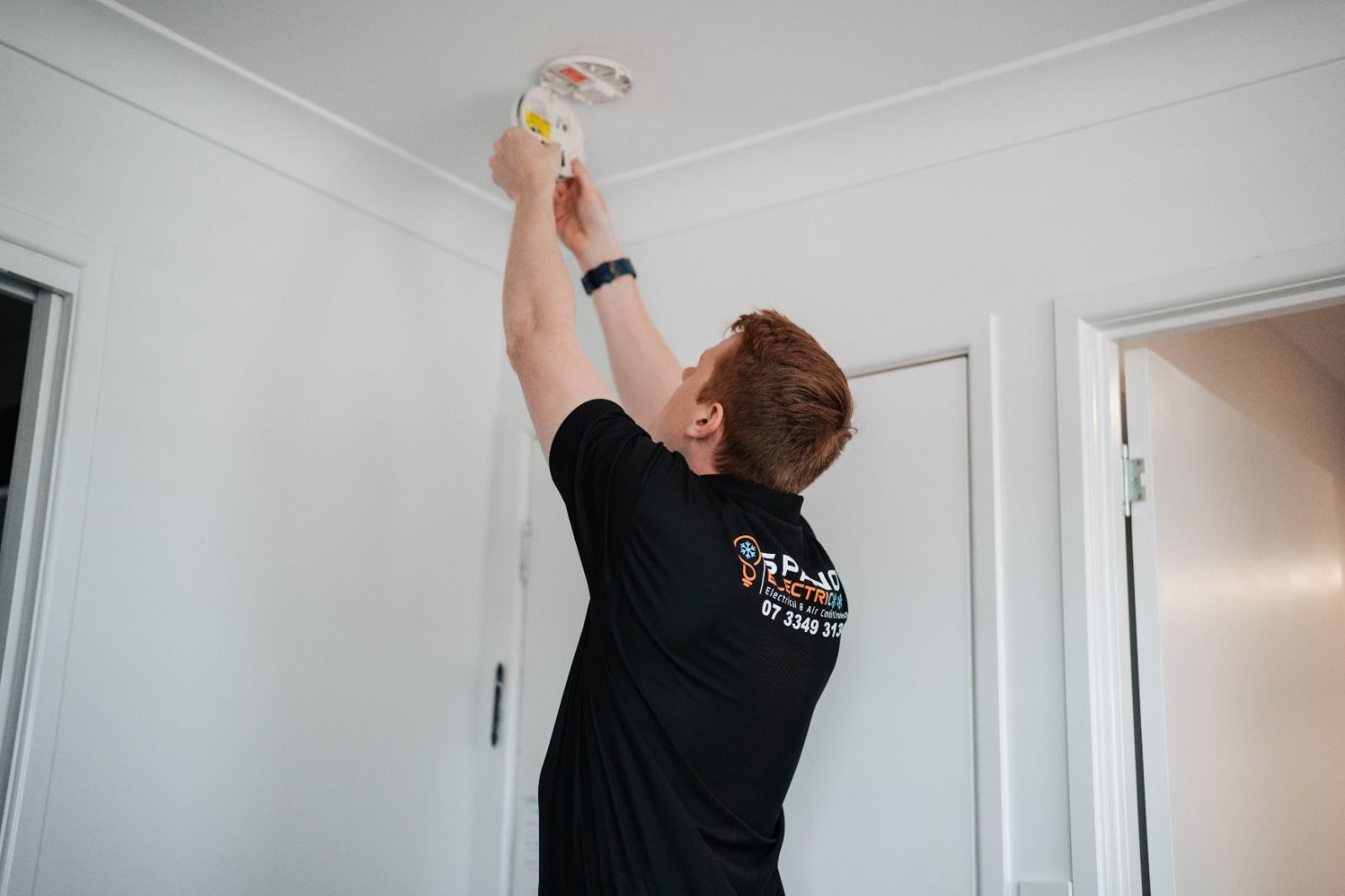
<p>Queensland smoke alarm compliance is becoming increasingly important for homeowners. From 1 January 2027, all existing private homes, townhouses, units and manufactured homes must have compliant interconnected photoelectric smoke alarms.</p><p></p><p>This is the final stage of Queensland’s smoke alarm legislation. The rules are designed to improve early fire warning and give occupants more time to respond safely.</p><p>At Spanos ElectriCool, we understand that smoke alarm compliance involves more than fitting an alarm to the ceiling. Alarm type, location, age, power source and interconnection all matter.</p><p>Planning early gives homeowners more time to check existing alarms and arrange any required work before the 2027 deadline.</p><h2>What Does the 2027 Smoke Alarm Deadline Mean?</h2><p>Queensland smoke alarm laws have been introduced in stages since 2017. The final stage applies to remaining existing domestic dwellings from 1 January 2027.</p><p>For homeowners researching the 2027 smoke alarm deadline QLD requirements, the key date is 1 January 2027.</p><p>An older working smoke alarm does not automatically mean your home meets the current requirements.</p><h3>Which Homes Need to Comply?</h3><p>From 1 January 2027, existing private homes, townhouses, units and manufactured homes across Queensland will need compliant interconnected photoelectric smoke alarms.</p><p>Requirements already apply in some situations, including when homes are sold or leased.</p><p>Homeowners should review their current smoke alarm system before the deadline. If changes are needed, professional installers can assess, replace and test the alarms.</p><h3>Why Should Homeowners Act Before 2027?</h3><p>The Office of Fair Trading smoke alarm advice encourages Queensland homeowners to prepare early rather than wait until the final months.</p><p>Queensland’s Office of Fair Trading has advised homeowners not to leave compliance work until the last minute. Increased demand may affect product supply and pricing.</p><p>Early planning can help you:</p><ul><li>Identify expired or faulty alarms.</li><li>Check whether existing alarms are interconnected.</li><li>Confirm whether alarms are photoelectric.</li><li>Check for the required Australian Standard marking.</li><li>Allow enough time for installation or replacement work.</li><li>Avoid rushing compliance work near the deadline.</li></ul><h2>What Makes a Smoke Alarm Compliant in Queensland?</h2><p>Queensland guidance sets clear requirements for compliant smoke alarms.</p><p>Required alarms must be photoelectric and interconnected. They must comply with AS 3786-2014 and be less than 10 years from the date of manufacture.</p><p>They must also operate correctly when tested.</p><h3>Photoelectric Smoke Alarms</h3><p>Photoelectric alarms use light-based sensing technology to detect smoke.</p><p>Under Queensland requirements, compliant smoke alarms must be photoelectric. They must not contain an ionisation sensor.</p><p>The alarms should also carry the AS 3786-2014 marking.</p><p>Alarm age is also important. An alarm may appear clean and functional but still be too old to meet current requirements.</p><h3>Interconnected Smoke Alarms</h3><p>Interconnection is another key requirement.</p><p>When one interconnected alarm detects smoke, the other required alarms in the dwelling also activate.</p><p>This can provide an earlier warning to people in other areas of the property.</p><p>Interconnection may use wiring or compatible wireless technology. The correct option depends on the existing installation and property setup.</p><h2>Where Do Smoke Alarms Need to Be Installed?</h2><p>Correct placement is just as important as the type of alarm.</p><p>Queensland requirements generally specify alarms in each bedroom, in connecting hallways and on each storey of a dwelling.</p><p>If a storey has no bedrooms, at least one alarm is required in the most likely path of travel to an exit.</p><h3>Placement Matters for Effective Warning</h3><p>Where practical, smoke alarms should be installed on the ceiling.</p><p>Queensland Fire Department guidance also outlines separation distances from corners, lights, air-conditioning vents and ceiling fans.</p><p>Sloping ceilings, exposed beams and stairways may require additional consideration.</p><p>If you are comparing smoke detector installers Queensland wide, choose a qualified professional who understands alarm positioning, interconnection and electrical requirements.</p><h2>Why Regular Smoke Alarm Testing and Servicing Matters</h2><p>Compliance does not end after installation.</p><p>Smoke alarms should be tested monthly and kept free from dust and debris.</p><p>Regular testing helps confirm that each alarm is operating correctly.</p><h3>Check the Age and Condition of Your Alarms</h3><p>Smoke alarms that are more than 10 years old from the date of manufacture need replacement.</p><p>Alarms that fail when tested should also be replaced.</p><p>If an existing hardwired alarm needs replacement, the replacement must also be hardwired.</p><p>Our smoke alarm service in Brisbane includes installation, replacement, testing and servicing.</p><p>Spanos ElectriCool can assess existing alarms and explain what work may be required for your property.</p><h2>What Could Happen If Your Smoke Alarms Are Not Compliant?</h2><p>Non-compliance can create problems depending on the property and circumstances.</p><p>For homeowners researching smoke alarm legislation Queensland requirements, it is important to understand that specific obligations already apply in some situations.</p><p>This includes properties that are being sold or leased.</p><h3>Selling or Leasing a Property</h3><p>Smoke alarm requirements are especially important when a property is being sold or leased.</p><p>Queensland Fire Department states that homes being sold must have the required photoelectric, interconnected smoke alarms.</p><p>Rental properties also have obligations under the staged legislation.</p><p>Planning ahead can help avoid delays. An inspection may identify outdated or incorrectly installed alarms shortly before a property transaction.</p><h3>Avoid Leaving Compliance Until the Deadline</h3><p>The 2027 deadline does not mean homeowners should wait until 2027.</p><p>Queensland Government guidance recommends avoiding last-minute action.</p><p>Demand for compliant alarms and installation services may increase as the deadline approaches.</p><p>Arranging smoke alarm upgrades early gives homeowners more time to address any issues found during an assessment.</p><h2>When Should You Arrange Smoke Alarm Upgrades?</h2><p>There are several reasons to arrange an assessment before the final deadline.</p><p>You may need an upgrade if your alarms are expired, fail testing, are not interconnected or are the wrong type.</p><p>Changes to the property may also affect the required setup.</p><h3>Older Systems May Need Attention</h3><p>Check the date of manufacture and markings on older alarms.</p><p>Queensland Fire Department states that compliant alarms must be less than 10 years from the date of manufacture.</p><p>They must also operate when tested and meet AS 3786-2014.</p><p>Spanos ElectriCool provides smoke alarm installation and replacement services.</p><p>Our process can include booking, site assessment, quoting and completion of approved work.</p><h3>Hardwired and Battery-Powered Systems</h3><p>Queensland requirements allow compliant smoke alarms to be hardwired or use a non-removable 10-year battery in applicable existing dwellings.</p><p>However, if an existing hardwired 240V alarm is replaced, the new alarm must also be hardwired.</p><p>The correct option depends on the existing installation and the requirements that apply to the property.</p><h2>How Spanos ElectriCool Can Help With Smoke Alarm Compliance</h2><p>Spanos ElectriCool smoke alarms services include installation, replacement, testing and servicing for residential properties in Brisbane.</p><p>We can install compliant photoelectric alarms in required bedrooms, hallways and levels of homes.</p><h3>A Practical Approach to Compliance</h3><p>Our process starts by reviewing the property and its current smoke alarm system.</p><p>Where a site visit is required, we assess the installation and provide a fixed-price quote before approved work begins.</p><p>After the work is completed, the installation is tested as appropriate.</p><p>Reviewing your system before the 2027 deadline gives you time to identify what needs to change and arrange the required work.</p><h2>A Simple 2027 Smoke Alarm Checklist</h2><p>Before the deadline, homeowners can review the following points:</p><ul><li>Check that each required alarm is less than 10 years old from the date of manufacture.</li><li>Look for the AS 3786-2014 marking.</li><li>Confirm that the alarms are photoelectric.</li><li>Check whether the required alarms are interconnected.</li><li>Test each alarm monthly according to the manufacturer’s instructions.</li><li>Check that alarms are positioned correctly.</li><li>Arrange a professional assessment if you are unsure about compliance.</li><li>Do not remove or disable alarms because of nuisance activations.</li></ul><p>If a hardwired alarm needs replacement or an electrical connection needs modification, the work should be completed by an appropriately licensed electrician.</p><h2>Conclusion</h2><p>Existing private homes, townhouses, units and manufactured homes must have compliant interconnected photoelectric smoke alarms by 1 January 2027.</p><p>Queensland smoke alarm compliance covers alarm type, interconnection, age, placement and operation.</p><p>Taking action early can make the process easier.</p><p>It also gives homeowners time to identify expired, faulty or unsuitable alarms before the deadline.</p><p>If you are unsure about your property’s smoke alarm setup, contact Spanos ElectriCool to arrange an assessment or request a quote.</p><h2>Frequently Asked Questions</h2><h3>1. What is the smoke alarm deadline in Queensland?</h3><p>The final deadline for existing Queensland homes is 1 January 2027.</p><p>By this date, existing private homes, townhouses, units and manufactured homes must have compliant interconnected photoelectric smoke alarms.</p><h3>2. Do all smoke alarms need to be interconnected?</h3><p>Required smoke alarms in a dwelling must be interconnected.</p><p>When one alarm detects smoke, the other required alarms should also activate.</p><p>Interconnection may be wired or wireless, depending on the installation.</p><h3>3. How old can a compliant smoke alarm be?</h3><p>Queensland requirements state that smoke alarms must be less than 10 years from the date of manufacture.</p><p>Alarms that are more than 10 years old or fail when tested should be replaced with compliant alarms.</p><h3>4. Can I install a battery-powered smoke alarm myself?</h3><p>Queensland Fire Department states that some 10-year non-removable battery photoelectric smoke alarms can be installed by homeowners.</p><p>Hardwired smoke alarms must be installed by a licensed electrician.</p><p>The correct installation depends on the existing system and applicable requirements.</p><h3>5. Why should I arrange smoke alarm work before 2027?</h3><p>Starting early gives you time to identify expired, faulty or non-compliant alarms.</p><p>Queensland’s Office of Fair Trading also recommends avoiding the last minute.</p><p>Increased demand near the deadline may affect supply and pricing.</p>
Enjoyed This Article?
Get A Quick Quote
Fill out our form and one of our friendly office staff will get back to you within 2 hours. Or call our office on (07) 3349 3134.
 (1).png)